Badrinath
Enquiry NOW
Badrinath: A Spiritual Haven Amidst the Himalayas
High in the majestic Himalayas, where towering peaks touch the skies and icy winds whisper ancient stories, lies the sacred town of Badrinath. Nestled at an altitude of 3,133 metres in the Chamoli district of Uttarakhand, Badrinath is one of the most revered pilgrimage destinations in India. For centuries, this spiritual sanctuary has drawn saints, seekers, and travellers alike—each arriving with a different purpose but leaving with the same sense of peace and divine connection.
A journey to Badrinath is not merely a trip through the mountains; it is a pilgrimage of the heart. Here, the concept of a travel itinerary dissolves into the rhythm of temple bells, flowing rivers, and the quiet majesty of the Himalayas. Whether you come in search of spiritual enlightenment or simply to witness the breathtaking beauty of nature, Badrinath promises an experience that touches both the soul and the senses.
Reaching the Sacred Town
Enquiry NOW
Getting to Badrinath is an adventure in itself, offering travellers a chance to experience the scenic beauty of Uttarakhand’s mountains, forests, and river valleys. The nearest airport to Badrinath is Jolly Grant Airport in Dehradun, located approximately 310 kilometres away. From the airport, visitors typically travel by road, passing through charming hill towns and winding mountain routes.
For those who prefer train travel, the nearest railway stations are in Haridwar and Rishikesh. These cities serve as important gateways to the Char Dham pilgrimage circuit. From there, travellers can hire taxis or board buses that gradually climb through the Garhwal Himalayas toward Badrinath.
The road journey itself is unforgettable. As you ascend deeper into the mountains, the landscape transforms dramatically. Lush green forests give way to rugged cliffs, while sparkling rivers like the Alaknanda accompany travellers along the route. The journey offers glimpses of traditional villages, terraced fields, and snow-capped peaks that seem almost within reach.
Though the terrain can be challenging, the journey to Badrinath is part of the spiritual experience. Each turn of the road feels like a step closer to something sacred.
The Sacred Badrinath Temple
Enquiry NOW
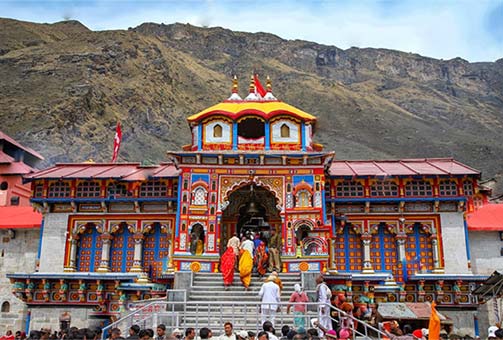
At the heart of this holy town stands the Badrinath Temple, dedicated to Lord Vishnu in his form as Badrinarayan. The temple is one of the four sacred shrines that make up the Char Dham Yatra, along with Kedarnath, Gangotri, and Yamunotri. Completing this pilgrimage is believed to cleanse one’s sins and lead the soul toward liberation.
The temple’s colourful façade stands out against the stark mountain backdrop, creating a striking visual contrast. Pilgrims from across India gather here to seek blessings and offer prayers to Lord Vishnu. Inside the sanctum rests the black stone idol of Badrinarayan, believed to be more than a thousand years old.
One of the most important rituals associated with the temple is bathing in the Tapt Kund, a natural hot water spring located near the temple entrance. Despite the freezing temperatures of the surrounding mountains, the water in the spring remains warm. Devotees believe that taking a dip here purifies the body and soul before entering the temple for worship.
Daily rituals at the temple include morning and evening aartis, offerings of flowers and fruits, and the chanting of sacred hymns. The atmosphere during these ceremonies is deeply spiritual, with the sound of bells and devotional songs echoing through the valley.
Exploring the Beauty Around Badrinath
Enquiry NOW
While the temple is the main attraction, the region surrounding Badrinath offers several fascinating places that combine spiritual significance with natural beauty.
Just three kilometres from Badrinath lies Mana Village, often referred to as the last village of India before the Indo-China border. This picturesque settlement is known for its traditional stone houses and breathtaking views of the mountains. Mana is steeped in mythology and is believed to have connections with the epic Mahabharata.
One of the most notable spots in Mana is Vyas Gufa, a cave where Sage Vyas is believed to have composed the Mahabharata. Nearby is Ganesh Gufa, where Lord Ganesha is said to have written the epic as Sage Vyas dictated it. These ancient caves attract pilgrims and history enthusiasts alike.
Another stunning attraction near Badrinath is Vasudhara Falls, located around nine kilometres away. The waterfall cascades down from a height of over 120 metres and creates a mesmerising sight against the rocky cliffs. According to local belief, the water of Vasudhara falls only on those who are pure at heart. The trek to the falls is relatively moderate and rewards visitors with spectacular views of the surrounding Himalayan landscape.
Nature lovers should not miss the Valley of Flowers, a UNESCO World Heritage Site located about 25 kilometres from Badrinath. This extraordinary valley bursts into colour during the blooming season, with thousands of species of alpine flowers carpeting the landscape. Rare plants, medicinal herbs, and diverse wildlife make the valley a paradise for botanists and trekkers.
Although reaching some of these attractions may require short treks or drives, the effort is well worth it. Local guides are often available to help visitors explore these places safely while sharing stories and legends connected to the region.
Celebrating the Badri-Kedar Festival
Enquiry NOW
Badrinath is not only a place of pilgrimage but also a vibrant centre of culture and tradition. One of the most significant events celebrated here is the Badri-Kedar Festival. Held annually between June and September, this festival symbolises the divine connection between Lord Vishnu of Badrinath and Lord Shiva of Kedarnath.
During the festival, the temple town comes alive with devotional music, dance performances, and colourful processions. Artists from across Uttarakhand gather to showcase traditional Garhwali culture through folk dances and musical recitals.
A highlight of the festival is the grand procession of the idols of Lord Badrinath and Lord Kedarnath. The beautifully decorated idols are carried through the streets amid chants, prayers, and joyous celebrations. Devotees from across the country come to witness this spiritual spectacle.
The Badri-Kedar Festival provides visitors with a unique opportunity to experience the rich cultural heritage of the region while participating in sacred traditions that have been preserved for centuries.
A Taste of Local Culture
Enquiry NOW
Beyond its temples and landscapes, Badrinath offers travellers a chance to immerse themselves in the local culture of the Garhwal region. The town provides a variety of accommodation options, ranging from hotels and guesthouses to traditional dharamshalas that cater to pilgrims.
Food in Badrinath reflects the simplicity and purity associated with pilgrimage destinations. Most eateries serve vegetarian meals prepared according to Hindu dietary traditions. Visitors can enjoy dishes from North Indian, South Indian, and Gujarati cuisines.
Local Garhwali delicacies are also worth trying. Sweets such as bal mithai and singori are popular treats that offer a taste of the region’s culinary heritage. These traditional sweets are often prepared using local ingredients and have been part of the culture for generations.
Shopping in Badrinath is another unique experience. The town’s markets are filled with spiritual souvenirs and religious artefacts. Pilgrims often purchase items such as Rudraksha beads, idols of Hindu deities, prayer books, and sacred threads.
In addition to spiritual items, visitors can find local handicrafts and warm clothing—essential for surviving the chilly Himalayan climate. Handmade woollen shawls, caps, and sweaters are popular among tourists.
Perhaps the most memorable part of visiting Badrinath is interacting with the local people. The residents of the town are known for their humility, warmth, and deep spiritual devotion. Their simple lifestyle and unwavering faith create a welcoming environment for visitors seeking peace and reflection.
Best Time to Visit Badrinath
Enquiry NOW
The best time to visit Badrinath is during the summer and early autumn months, particularly from May to June and September to October. During this period, the weather is relatively pleasant, and the roads leading to the town are generally open and accessible.
Summer is especially popular among pilgrims because the temple doors open during this time after remaining closed through the winter months. The surrounding valleys also begin to bloom, making it an ideal time for sightseeing and trekking.
Travellers are advised to avoid visiting during the monsoon season, from July to August. Heavy rainfall can cause landslides and road blockages, making travel difficult and potentially dangerous.
From November to April, the region experiences extremely cold temperatures and heavy snowfall. During these months, the Badrinath Temple remains closed, and the idol of Lord Badrinarayan is moved to Joshimath for worship.
Planning a trip during the recommended months ensures a safer and more enjoyable experience.
A Journey of Faith and Discovery
Enquiry NOW
Badrinath is far more than a tourist destination—it is a place where spirituality, mythology, and natural beauty come together in perfect harmony. The towering mountains, sacred rivers, and ancient temples create an atmosphere that inspires introspection and devotion.
Every traveller who visits Badrinath carries home a unique story. For some, it is a story of faith fulfilled. For others, it is a story of discovering the quiet power of nature and spirituality.
In this sacred corner of the Himalayas, the ordinary world feels distant. Time seems to slow down, allowing visitors to reconnect with themselves and the divine.
Whether you arrive as a pilgrim, an adventurer, or a curious traveller, Badrinath welcomes you with open arms. Here, amidst the eternal mountains and flowing rivers, you may just find the peace and inspiration you have been searching for all along.